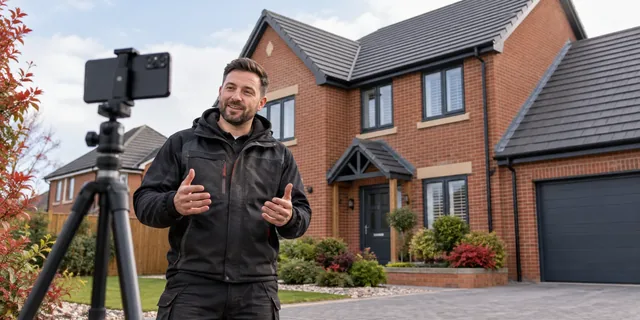
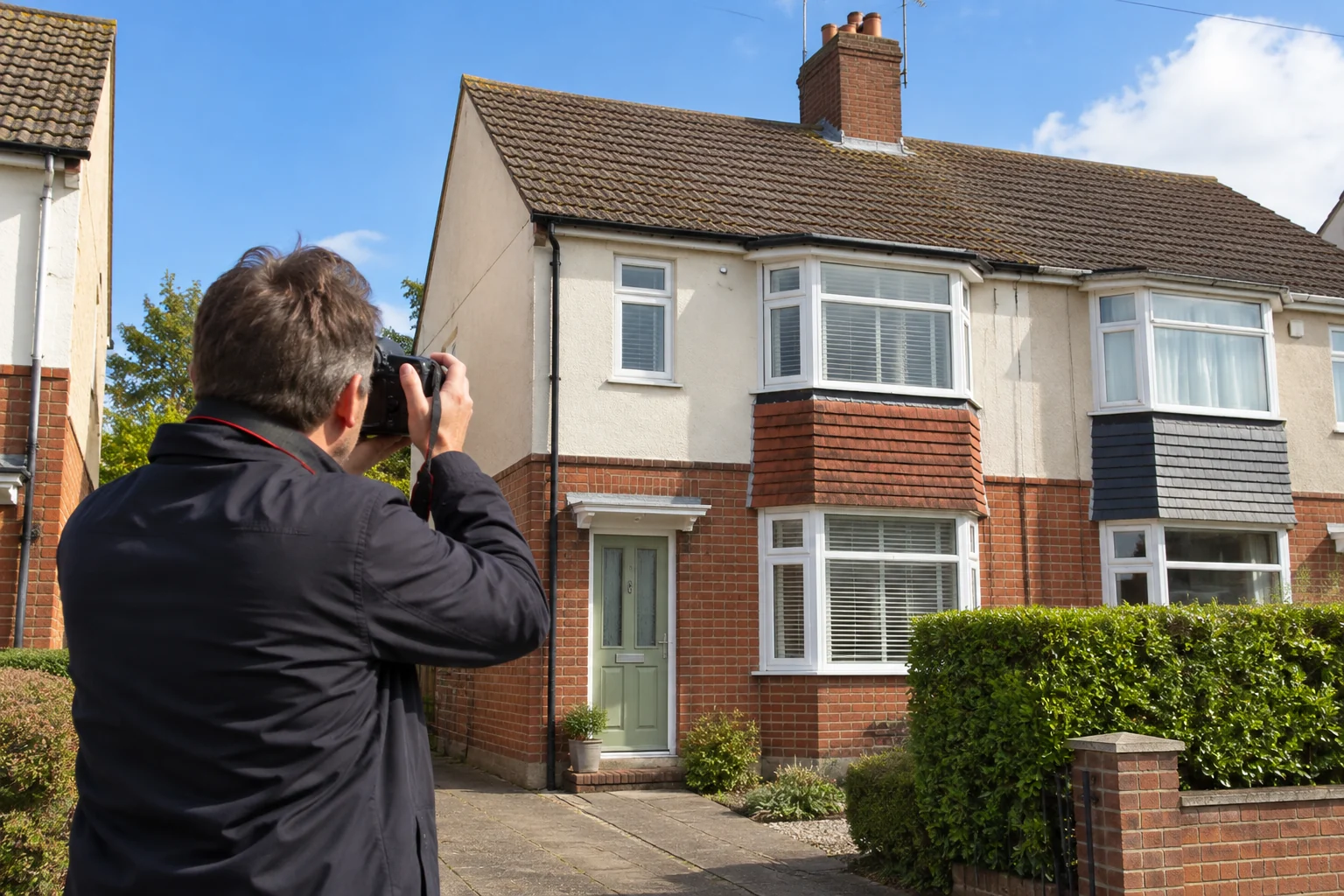
A finished roof can show more about a roofing business than a page of broad promises. The challenge is turning that work into an advertisement a homeowner can understand quickly. A photograph that looks impressive to another tradesperson might leave a customer wondering what changed, whether the service is relevant, and who to contact. Good project advertising closes those gaps with a clear subject, useful context and a straightforward next step.
You do not need to photograph every stage of every job or build a complicated production process. Start by choosing the projects that represent the work you want to win. Then collect a small, consistent set of images and describe what they show in ordinary language. The following approach helps roofing companies use real work to support stronger Facebook and Instagram advertising without relying on exaggerated claims.
Choose the customer question before the photograph
An advertisement should answer one main question. A homeowner might want to know whether you repair slate roofs, replace tired flat roofing, or work on homes similar to theirs. Choose that question first. It becomes much easier to select an appropriate photograph when you know what the image needs to explain.
For example, a hypothetical contractor wanting more roof replacement enquiries could feature a completed domestic replacement and explain the type of project. A close-up of a small repair may be excellent evidence for a repair campaign, but it sends a different signal. Keep the project, service and offer aligned. Do not make the viewer work out which part of your business the advertisement represents.
Build a useful project photo set
Ask your team to collect a wide view that establishes the property, a closer view that shows the finished work, and a supporting detail where it adds meaning. A consistent set gives you options for different advertisements without repeatedly using the same picture. Photographs taken from safe, authorised positions are sufficient; marketing material never justifies additional site risk.
Where permission allows, photograph the relevant area before work begins as well as after completion. Try to use a comparable angle and framing so the change is easy to understand. Avoid staging damage, hiding context or presenting a different property as the original condition. Honest visual comparisons are more useful than dramatic ones that create an inaccurate impression of the job.
Make the roof the subject
Social feeds contain competing visual information. Your image needs an obvious subject even when displayed on a small screen. Crop away unnecessary foreground or empty sky when doing so improves clarity. Keep enough of the property visible to help a homeowner understand the setting. A useful crop balances evidence with context.
Look for distractions before publishing. A skip, unrelated vehicle, house number or neighbour's window might dominate the picture. Sometimes another image is a better choice than heavy editing. The goal is to present the completed work clearly, not to change its appearance. Retain original files so you can compare the advertisement with the source if questions arise during review.
Write a caption that adds information
A caption should explain what the photograph cannot. Identify the roofing service, describe the customer's broad requirement and explain the next step for someone with a similar need. Keep the language specific enough to be useful without including private details about the property or its occupants.
A hypothetical caption might say: “A completed tiled roof replacement for a homeowner looking to renew an ageing roof. Planning similar work? Tell us about your property and we can discuss an assessment.” This gives the photograph a purpose without making unsupported promises about savings, lifespan or availability. Replace the example with accurate details from your own project and the enquiry process your team actually follows.
Treat before-and-after comparisons carefully
Before-and-after content can help explain the scope of work, but it should not imply that appearance alone proves structural performance. A tidy finished photograph supports a conversation about workmanship; it does not establish every technical detail. Use the caption to explain the work performed rather than suggesting that a visual transformation answers all customer questions.
Keep the sequence obvious and the images comparable. Avoid changing lighting or colour so heavily that the contrast becomes misleading. If the “before” photograph shows temporary working conditions, say so when that context matters. A homeowner should understand what changed and why the example relates to their enquiry. Clarity strengthens trust more reliably than visual exaggeration.
Connect the image to the right destination
A good photograph can earn attention, but the destination must continue the same conversation. If an advertisement features flat roofing, the linked page should explain that service and make contacting the business easy. Sending everyone to a broad homepage can introduce unnecessary searching, especially for visitors using a phone.
Check the service name, photograph, location wording and call to action together. They should tell a consistent story. If the advertisement invites a roof assessment, explain on the page how someone requests one and what information is helpful. If availability varies, describe the process honestly. Do not advertise an instant appointment if the office first needs to assess the enquiry and arrange a suitable time.
Compare ideas without changing everything
Use a simple comparison plan. You might test a wide completed-project view against a closer detail while keeping the service and caption broadly consistent. Alternatively, keep the photograph and compare two different customer questions. Changing the image, audience, offer and destination together makes it difficult to learn which element influenced the response.
Record more than reactions or comments. Ask whether enquiries matched the service, whether the properties were in your working area, and whether the people contacting you understood the next step. These observations are useful even when the number of enquiries is modest. Your office team can often explain why an apparently attractive advertisement produced conversations that were difficult to progress.
Create an asset library your team can use
Store approved project images by service and project reference, with permission notes and a short factual description. Keep a separate folder for material approved for advertising. This reduces the chance of using an unapproved customer photograph or repeatedly asking the team for files that already exist.
A practical library also helps you avoid using the same project to represent every service. Include the photographer's name where ownership needs recording, and retain any customer approval alongside the files. Review the advertising version on a phone before launch. A picture that looks clear on a large monitor can lose its subject when reduced to a small feed placement.
Turn visible workmanship into a clear next step
Project photography works hardest when it helps the right homeowner recognise a relevant service and understand how to enquire. Start with one suitable project, choose a clear photograph, write a factual caption and send visitors to a matching page. Listen to the enquiries that follow and improve the connection between the picture and the conversation.
Galaxy Roofer Marketing can help connect your project content with your wider social advertising and website journey. The starting point is the work you already do and the roofing enquiries you want to attract. A considered photograph, used with accurate information, gives that conversation a stronger foundation.
Explore how these ideas connect with your marketing.
Social advertising for roofing businesses ↗